This is general educational information, not legal advice. Century Support Services is a debt settlement company, not a law firm, and does not...
Payday Loan Debt Relief: Your Options When the Cycle Won’t Stop
read more
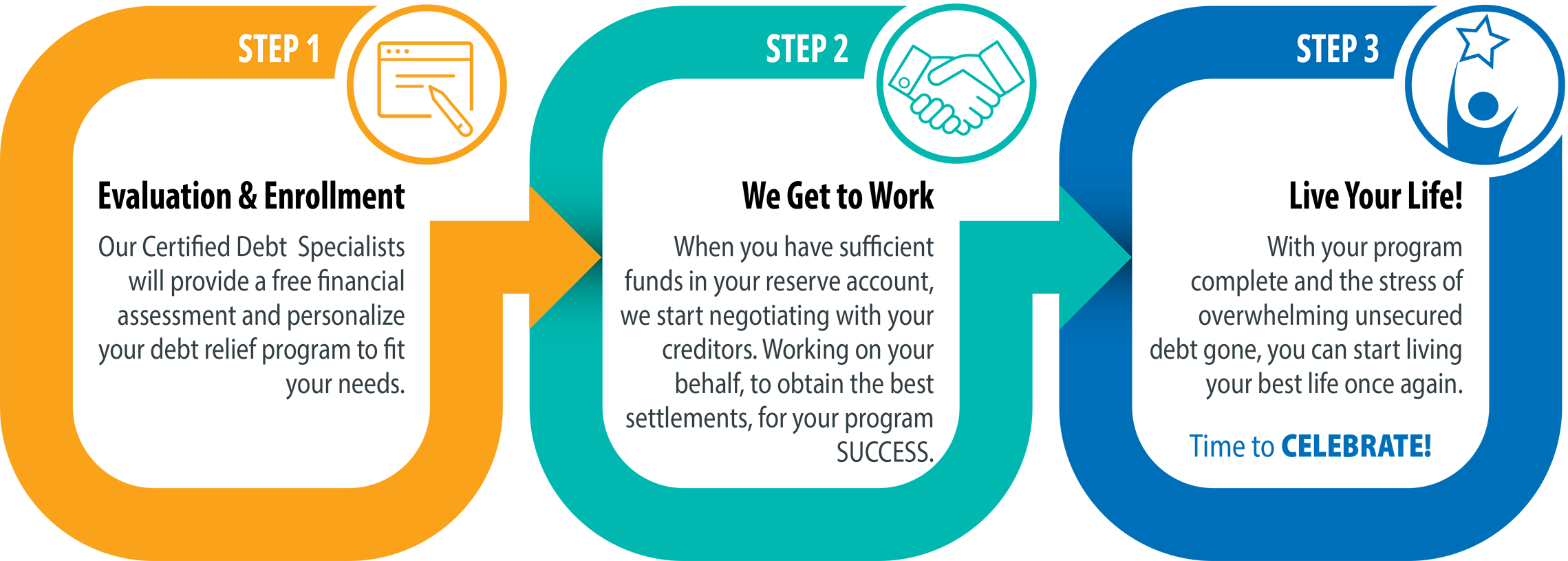
Century’s 3-Step program has worked for over 255,000 people and counting.
Learn how debt settlement works.

Understanding your finances is an essential part of fiscal responsibility, including when you face unsecured debt. Century Support Services, LLC gladly helps countless clients reduce and pay off their credit card balances and other unsecured debt nationwide. Our financial literacy advice can be valuable when you need to work toward a better financial future. On this page, we explain the foundational concepts of financial literacy to ensure you have the necessary knowledge to handle your finances with confidence. Having the facts and figures for your income, budget, and expenses is the best way to keep your balances in the black or deal with a mountain of unsecured debt. Let us guide you in your efforts to achieve better financial health with the information below.
Financial literacy is the knowledge and skill set needed to make informed and effective decisions with your financial resources. It's more than just knowing how to balance a checkbook. This essential expertise involves understanding key concepts like budgeting, saving, investing, and debt management. Factors to consider include your income, expenses, long-term goals, and risk tolerance. This understanding is especially crucial when dealing with unsecured debt, such as credit cards or personal loans. Being financially literate helps you grasp the impact of interest rates and repayment terms, empowering you to avoid overwhelming debt and use credit as a tool rather than a trap. It provides the foundation for building a stable and secure financial future on your own terms.
Mastering your cash flow starts with a solid budget and a serious commitment to saving. Think of your budget as a strategic roadmap rather than a restrictive cage. By meticulously tracking every dollar, you can identify hidden leaks and redirect those funds toward your long-term dreams. It's about making your money work harder by optimizing every spending category, from groceries to subscriptions. You can start small by trimming unnecessary costs and funneling those funds into a dedicated emergency fund. This safety net provides the ultimate peace of mind, ensuring that life’s unexpected hurdles don't derail your entire financial journey. To build a more resilient financial future, Century Support Services, LLC urges you to consider the following practical and effective budgeting strategies:
Implement the 50/30/20 Rule - Allocate 50% of your take-home pay to needs, 30% to wants, and 20% to savings or debt repayment to maintain a healthy balance.
Track Every Cent - Use a mobile app or a simple spreadsheet for 30 days to visualize exactly where your money goes and identify habitual spending.
Automate Your Savings - Set up a recurring transfer to your savings account on payday so you prioritize your future self before you have the chance to spend your money.
Audit Subscriptions Monthly - Scrutinize your bank statements for recurring charges or memberships that you no longer use and cancel them immediately to reclaim "lost" cash.
Use the 48-Hour Rule - For non-essential purchases, wait two full days before buying to eliminate impulse spending and ensure the item is a genuine necessity.
Shop with a List - Whether buying groceries or clothes, stick to a predetermined list to avoid the "shiny object" syndrome that inflates your total at the checkout.
Build a Starter Buffer - Aim for an initial $1,000 emergency fund as quickly as possible to cover minor car repairs or medical bills without relying on credit.
With countless financial options available today, managing credit has become increasingly complex. Credit cards were once limited to those who met rigorous qualifications, but are now accessible to almost everyone. The rise of online financial services and constant promotional emails has made credit offers inescapable, creating a landscape where financial decisions can feel overwhelming. Understanding these choices and managing them wisely is essential for building financial health and avoiding potential pitfalls. Below, we've provided some helpful tips for finding and using online financial literacy tools:
Research Trusted Platforms - Focus on websites from recognized financial organizations or government agencies.
Look for Interactive Tools - Use calculators, budgeting apps, or quizzes to tailor solutions to your needs.
Read Reviews - Check user feedback and ratings to ensure credibility.
Stay Updated - Choose tools that provide the latest financial strategies or trends.
Start Small - Begin with tools that address your immediate goals, like budgeting or credit management.
Applying financial literacy is a transformative step toward regaining control over unsecured obligations, such as high-interest credit cards or personal loans. By honing your budgeting skills and utilizing debt-tracking software early on, you can visualize payment trajectories and identify areas where discretionary spending can be redirected to principal balances before interest compounds into a crisis. However, if your debt has already spiraled out of control, these same tools become vital for crisis management. Strategic knowledge of debt avalanches or settlements allows you to negotiate with creditors from a position of informed strength. Ultimately, integrating your newfound financial education into your daily routine transforms overwhelming numbers into a structured, manageable roadmap that prevents temporary setbacks from evolving into long-term insolvency and fosters a more resilient financial future. The following is valuable advice about how to apply financial literacy knowledge, skills, and tools to address your unsecured debt:
Automate Your Strategy - Configure specialized banking apps to round up transactions, funneling the "spare change" directly toward your highest-interest unsecured balances to accelerate repayment.
Leverage Comparison Analytics - Use online platforms to evaluate balance transfer offers, ensuring you fully understand the fee structures before moving debt to lower-interest vehicles.
Engage in Proactive Negotiation - Apply your knowledge of consumer rights to contact lenders for hardship programs or interest rate reductions when your debt-to-income ratio fluctuates.
Prioritize Liquidity Buffers - While paying down debt, use budgeting tools to maintain a small emergency fund to prevent reliance on new credit during unexpected life events.
Audit Recurring Expenses - Periodically review subscription trackers to eliminate "vampire" costs, redirecting those recovered funds toward aggressive principal reduction.
Many experts argue that the crushing weight of consumer debt isn't just a symptom of a bad economy, but a direct result of a widespread lack of financial knowledge. To bridge this gap, a dedicated coalition of educators and nonprofits is pushing to integrate comprehensive financial literacy into high school curricula nationwide. Understanding how money works is no longer an elective skill. This expertise is a critical survival tool for navigating modern life. Century Support Services, LLC encourages you to engage in tools and programs to learn more, and you can turn to us for dedicated client support when addressing a mountain of unsecured debt.

Without a solid foundation in fiscal literacy, individuals often find themselves trapped in a cycle of high-interest unsecured debt, where minimum payments barely touch the principal balance. Failing to master these concepts leads to more than just a low credit score. This lack of knowledge creates a state of chronic stress that limits your freedom, housing options, and long-term security. Proactive education allows you to spot predatory lending practices and manage debt before it spirals out of control. By applying these lessons to your daily habits, you can transform your relationship with money from one of fear to one of empowerment, ensuring your financial goals stay within reach. Below are comprehensive financial literacy concepts that equip you with the tools to manage the following essential life factors:
Compound Interest Mechanics - Recognizing how interest can either build your wealth through investments or accelerate your downfall through high-rate credit cards.
Credit Profile Optimization - Understanding how your behaviors influence your credit report, which affects everything from insurance premiums to job opportunities.
Debt-to-Income Management - Learning the healthy ratios required to maintain liquidity while pursuing major life milestones like homeownership.
Risk Mitigation Strategies - Identifying the correct insurance products and emergency fund targets to shield your assets against unexpected legal or medical crises.
Tax Efficiency Planning - Gaining the necessary basic knowledge to navigate various tax brackets and utilize legal deductions to preserve more of your hard-earned income.
After reviewing the content on this page, Century Support Services, LLC encourages you to expand your knowledge and skills to improve your financial control and success. If you’re buried in sizable credit card balances and other unsecured debt, you can reach out to us for professional help reducing your debt and working toward financial freedom. Get in touch with us today for more information and to discuss your unsecured debt concerns.
As seasoned debt relief professionals, our team values your financial welfare and encourages you to learn more about financial literacy. Below, we’ve answered a couple of questions about this topic.
This is general educational information, not legal advice. Century Support Services is a debt settlement company, not a law firm, and does not...

This is general educational information, not legal or financial advice. Century Support Services is a debt settlement company, not a law firm, and...
This is general financial-planning education, not financial, legal, or tax advice. Century Support Services is a debt settlement company, not a law...