Consolidating credit card debt may make sense in some circumstances and may be less effective in others. Two of the biggest factors are whether your...

Should I Consolidate My Credit Card Debt? A Decision Guide
read more
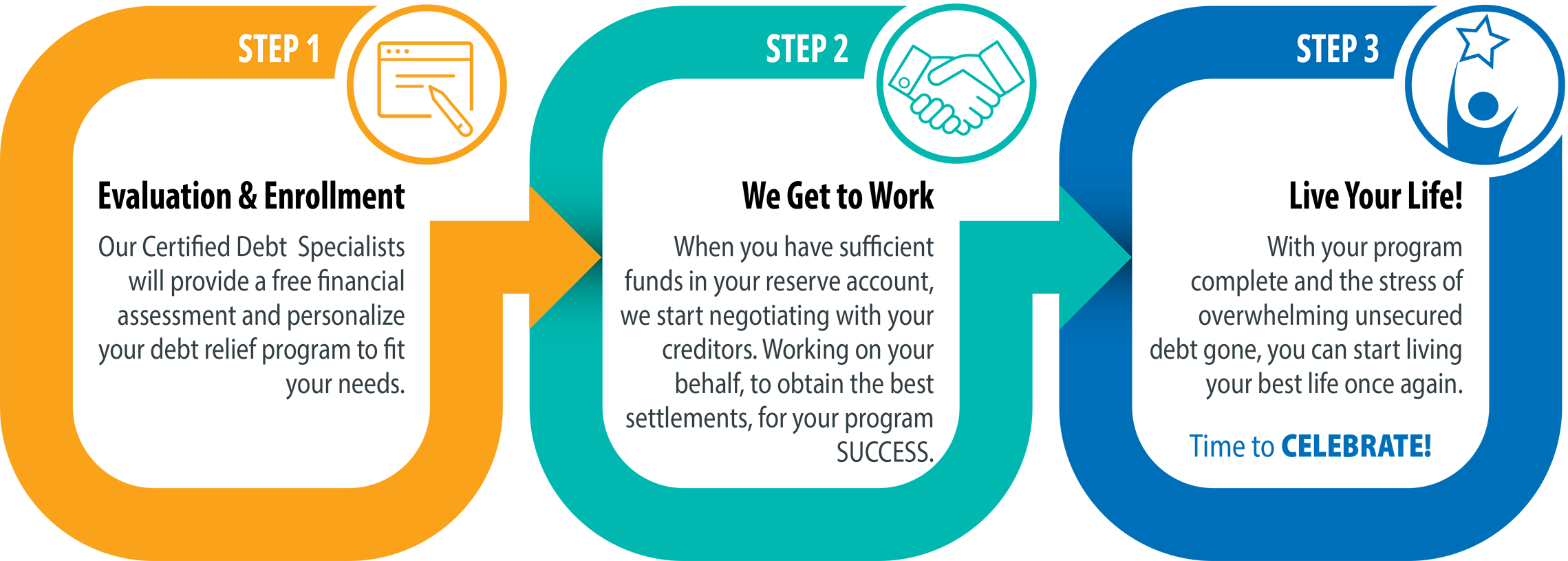
Century’s 3-Step program has worked for over 255,000 people and counting.
Learn how debt settlement works.

Century Support Services offers this debt payoff calculator to help consumers estimate how long it might take to pay off their current debt. Getting control of finances is a goal for everyone, and a clear understanding of how balances and interest grow is an essential part of this process. This is just part of our commitment to helping you navigate the world of personal finance. Whether you're struggling with high-interest credit cards, personal loans, or medical bills, we help you regain stability through our SmartTrack™ debt settlement program. Before you can fix the problem, however, you must understand the numbers behind it.
Knowledge is power, especially when it comes to your finances. Our debt calculator can provide you with a clear picture of your current standing and potential future scenarios. By inputting your current balances, interest rates, and what you can pay monthly, you can get an estimate of how long it will take to pay off your obligations and how much interest you'll pay over time. It's helpful to see various payment strategies, including what happens when you increase your monthly payment and how a lower interest rate might impact your payoff timeline. It also illustrates whether you can manage your debt on your own through budgeting and discipline, or whether the hole is too deep to manage and requires the assistance of a Certified Debt Specialist.
Important Note For Users
This calculator is intended for research and educational purposes only. Credit card interest formulas are incredibly complicated, involving compounding interest, daily periodic rates, and billing cycles that can fluctuate. This tool can't predict future bills, fees, or interest rate hikes that may increase your balance. The figures provided here are estimates to help guide your decision-making, but should be viewed for general informational purposes only, not specific financial advice.
Many consumers view credit cards as an extension of their income, but this is a dangerous way to approach them. A credit card should be viewed as a one-month loan if you have an emergency expense that you don't have the cash to cover at the moment. When a bank issues you a credit card, it's agreeing to lend you money for a period of roughly 30 days. The expectation is that you'll borrow the funds to make necessary purchases and then repay that "loan" in full when the statement arrives. When used this way, a credit card is a convenient tool for transactions and building a credit history.
The one-month loan model breaks down when it turns into a multi-year obligation. When you carry a balance month to month, the card that was convenient is now a financial burden. You're taking out a high-interest loan that has no fixed end date. The credit card issuer begins charging interest not just on the money you spent, but often on the interest that has already accrued. This compounding effect is why a small balance can balloon into an unmanageable sum over time, trapping you in a cycle of payments that barely scratch the surface of the principal.
Credit card limits and interest rates aren't universal. How much credit and the interest rate you're eligible for are likely different from those of your neighbors, friends, and family members because they're calculated based on your perceived risk as a borrower:

Credit Limit - Your income, credit score, and debt-to-income ratio determine this. Lenders want to offer credit to consumers they believe can repay them. As your credit builds and your income rises, you'll start to get better offers. If you have a history of maxing out cards, you won't be offered favorable terms.
Interest Rates - Also known as Annual Percentage Rates (APRs), these are heavily influenced by the "Prime Rate" set by the Federal Reserve and by your personal creditworthiness. If you have a high credit score, you represent a lower risk to the bank, and you'll typically qualify for a lower APR. If your score has dropped due to missed payments or high utilization, lenders will charge you a higher rate to offset the risk that you might default. A debt snowball calculator can illustrate why carrying a balance with a higher rate is trouble.
A common trap with credit cards is that they make it easy to live outside of your means, meaning you can spend more each month than what your paycheck can cover. Discipline and honest budgeting are the best ways to avoid this. Start by tracking every dollar that leaves your bank account and distinguishing between "wants" and "needs."
Many households view credit cards as an emergency tool to cover unexpected expenses. When a car breaks down or a medical emergency arises, the credit card feels like a safety net. However, it's not much of a safety net if you can't pay off that emergency expense immediately. In this instance, it begins to accrue interest, making the emergency significantly more expensive than the original cost. Setting up an emergency fund is a much better financial practice. Try depositing a set amount aside each month in a separate savings account so you're not tempted to touch it. Have it automatically deducted on payday so you don't even have to think about it. Every little bit helps, and it will build before you know it. Once you tap the fund for an emergency expense, such as replacing an appliance or fixing a car, add money back into the account.
If you have run the numbers on our calculator and realized that minimum payments will keep you in debt year after year, consider a different approach. This is where debt settlement is a viable path for many. We've helped over 300,000 clients get out of debt faster by negotiating with their creditors to settle outstanding debt for up to half of what they owe. For consumers facing debt of $10,000 or more and unable to afford more than the monthly minimums, or who have missed payments, this can break the cycle that would otherwise continue for years.
Using Century Support Services' credit card debt calculator is incredibly helpful for shining a light on your financial situation, because the numbers don't lie. If the calculator results indicate your current path is unsustainable, it's time to take action. We encourage you to contact us today for a free, no-obligation consultation with a Certified Debt Specialist. We'll discuss your debt and financial situation to determine if our SmartTrack™ program is the right fit for you.
Consolidating credit card debt may make sense in some circumstances and may be less effective in others. Two of the biggest factors are whether your...

Enrolled clients who actively use Century to monitor their SmartTrack™ program may feel more informed during the program period, not because the...

Many credit card issuers, including Chase, may offer accommodation options for cardholders experiencing financial hardship. The specific terms Chase...