Debt settlement is one of the most misunderstood options in personal finance. It is heavily promoted by companies with varying levels of legitimacy,...

Debt Settlement Pros And Cons: An Honest Assessment
read more
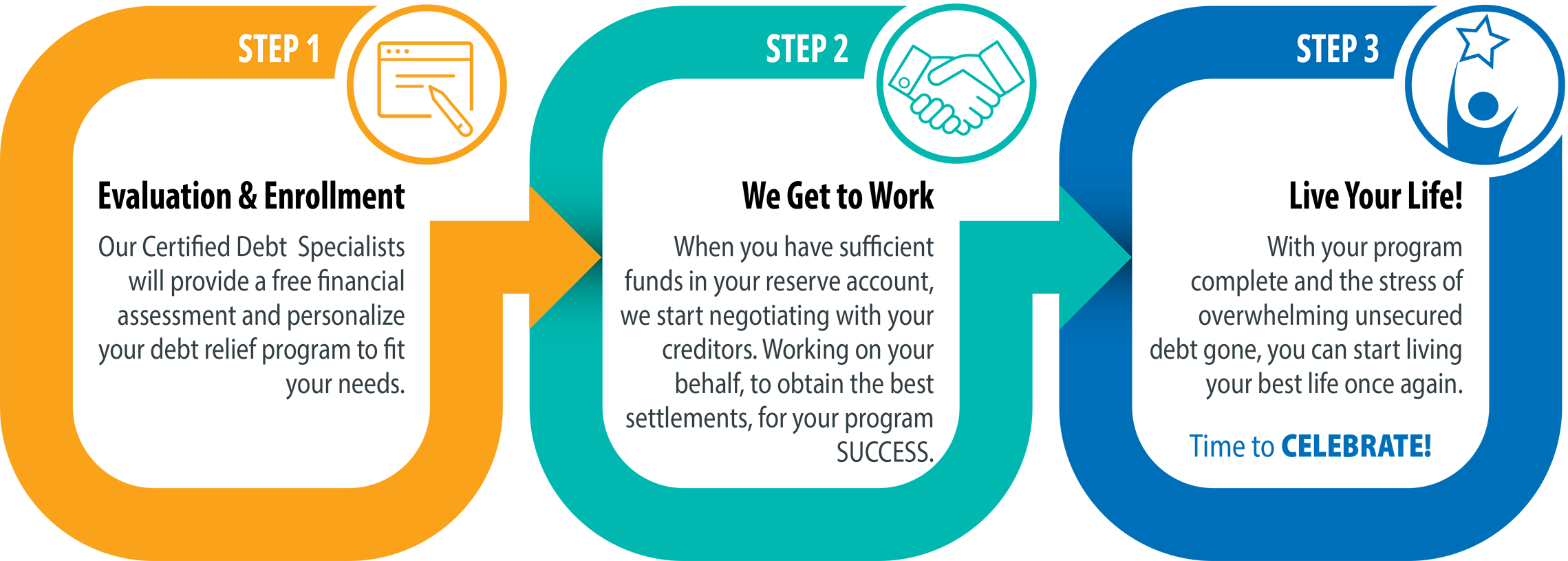
Century’s 3-Step program has worked for over 255,000 people and counting.
Learn how debt settlement works.

Divorce is recognized as one of life's most stressful events. Beyond the emotional aspect of separating from a partner, the logistical challenges are overwhelming. You're likely navigating legal fees, moving costs, budgeting on a single income, and the expense of establishing a separate household. A big question during the divorce process is, what secured and unsecured debts am I responsible for after the separation is finalized? If your financial situation is causing additional strain, divorce debt relief with Century Support Services can provide some breathing room as you get back on your feet.
Distinguishing between individual and joint debt is critical because it dictates who is legally responsible for repayment in the eyes of the creditor:
Individual Debt - Debt incurred by you or your spouse before the marriage, or debt incurred in one of your names alone during the marriage (depending on state law), is considered individual debt. If you opened a credit card in your name only and used it solely for personal expenses, you're typically responsible for it.
Joint Debt - This category includes any debt where both spouses signed the agreement. Common examples include joint credit cards, mortgages, and auto loans co-signed by both parties. In these cases, both individuals are fully responsible for the entire debt amount. If one person stops paying, the creditor will pursue the other for the full balance.
Where you live plays a massive role in how your debts are divided by the courts. U.S. states fall into two categories for asset and debt division:
Community Property States - These include California, Texas, Arizona, Idaho, Louisiana, Nevada, New Mexico, Washington, and Wisconsin. Most debt incurred during the marriage is considered "community" debt, so, regardless of whose name is on the account, both spouses are equally responsible for debts incurred between the wedding date and the date of separation. The court typically splits these debts 50/50.
Equitable Distribution States - The majority of other states follow equitable distribution laws. Equitable means fair, not necessarily equal. Various factors, such as each spouse's income, the length of the marriage, and who benefited from the debt, are considered when dividing the debt. This might result in a 60/40 split or another arrangement deemed fair by the judge.
Not all debts are treated the same during a divorce. Different liabilities require different strategies to ensure you're not left holding the bag for assets you no longer possess.
Mortgages and Home Equity - The family home is often the largest asset and liability. If one spouse keeps the house, they usually must refinance the mortgage into their name alone to remove the other spouse's liability. If refinancing isn't possible due to income or credit constraints, the home may need to be sold to pay off the loan.
Auto Loans - If both names are on a car loan, the spouse keeping the vehicle should refinance it in their name. If you remain on the loan but don't keep the car, your credit score is at risk if your former partner misses payments.
Credit Card Debt - Credit cards are notoriously difficult to manage in divorce because they're unsecured debt. Ideally, joint cards are paid off and closed immediately upon separation. If that's not possible, balances can be transferred to individual cards, or a debt relief plan may be required to resolve the balances for less than what is owed.
A divorce doesn't end a contract with a lender, and you're still responsible for your obligations to the bank, whether it's a joint or individual responsibility. If the judge orders your ex-spouse to pay a joint credit card, but your ex-spouse fails to make payments, the credit card company can still legally come after you for the money. This creates a precarious situation where your ex's financial negligence can damage your credit score. In some cases, debt resolution strategies are often necessary to sever these financial ties completely.
A simple step is managing authorized users on accounts. If you have a credit card in your name but your spouse has a card attached to the account as an authorized user, you're liable for their spending. Even in an amicable split, emotions can run high, and spending can spiral out of control. Contact your credit card issuers immediately to remove your spouse as an authorized user. This prevents them from adding new charges to an account that you're legally responsible for paying. Also, if you're an authorized user on their account, ask to be removed to ensure any card use or missed payments don't impact your credit report.

To minimize the financial impact of a divorce and protect your credit status, consider the following steps:
Establish a New Budget - You're likely moving from a two-income household to a single income or losing shared resources. A new budget based on your post-divorce life is essential.
Close Joint Accounts - Don't leave joint checking or savings accounts open. Withdraw your agreed-upon or court-ordered amount and open an account at a different bank.
Monitor Your Credit Report - Check it regularly. You'll see if a joint account is being neglected so you can address it before it becomes a financial and legal headache.
If you find yourself facing more debt than you can handle on your single income, various relief options can help you regain your footing:
Credit Counseling - These agencies create a Debt Management Plan (DMP). They may negotiate lower interest rates with creditors, allowing you to pay off the debt over 3 to 5 years. It's an option if you can afford the monthly principal payments but are struggling with the interest charges.
Debt Consolidation - Some consumers take out a new loan to pay off multiple debts. One monthly bill is easier for some to manage. However, this usually requires a good credit score and sufficient income to qualify, which can be difficult immediately following a divorce.
Debt Settlement - If your debt is over $10,000 and you're struggling to make minimum payments, debt settlement could be the answer. Certified Debt Specialists negotiate with your creditors to accept a payment that is less than the full amount you owe. It lowers your total debt load and helps you resolve obligations faster than making minimum payments.
Bankruptcy - Chapter 7 or Chapter 13 bankruptcy is a legal process to discharge or reorganize debts. While it provides a fresh start, it has long-lasting negative effects on your credit and is generally considered a last resort after other options have been exhausted.
If your marriage has ended and you're struggling with finances, Century Support Services offers debt relief after divorce to help you regain control and plan for your future. Joint debts, transitioning to a single income, and establishing a new lifestyle are a lot to take on at once. Our team of Certified Debt Specialists is here to offer free consultations and discuss whether you're eligible for our program. Contact us today to learn more.
Debt settlement is one of the most misunderstood options in personal finance. It is heavily promoted by companies with varying levels of legitimacy,...
If you’re researching debt settlement, you’re likely doing the same thing most people do before making a major financial decision:...
If you’re carrying significant unsecured debt and comparing your options, two paths that often come up are debt settlement and debt consolidation....