This article is educational, not legal or estate advice. Century Support Services is a debt settlement company, not a law firm, and does not provide...
Newly Widowed And In Debt: Understanding Your Options
read more
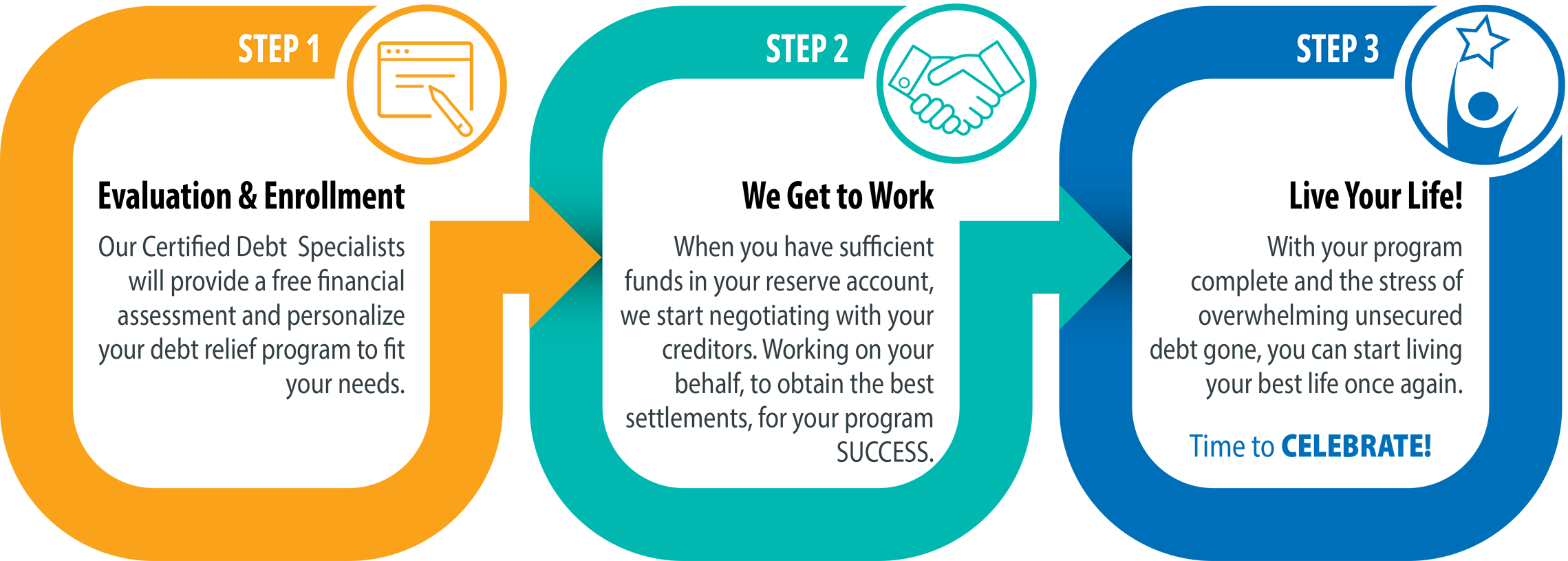
Century’s 3-Step program has worked for over 255,000 people and counting.
Learn how debt settlement works.

You can cut through the confusion and approach your financial situation smarter by reviewing the debt terms glossary from Century Support Services. Financial matters are stressful on their own, but when you're reading fine print or letters from creditors that include industry terms you might not be familiar with, it can raise the level of stress. Here, we've compiled some of the most common terms you might encounter when managing credit and debt with general definitions that consumers can easily digest. Knowledge is power in your quest to resolve your debt for a firm financial footing.
Annual Percentage Rate (APR) - The yearly rate charged by a lender or creditor for borrowing money, expressed as a percentage. These can fluctuate over time and illustrate the true cost of credit if you don't pay the balance in full by the due date.
Arrears - Money that's owed and should have been paid earlier. Being "in arrears" means you are behind on your payments.
Asset - Anything of value that you own, such as a home, car, savings account, or investments, which can be used to pay off debts.
Authorized User - Someone who is allowed to use another person's credit card account but is not legally responsible for paying the bill.
Available Credit - The difference between your credit limit and your current balance. This is the amount you have left to spend on your credit card.
Balance - The total amount of money you owe on an account, such as a credit card or loan.
Balance Transfer - Moving debt from one credit card to another, usually to take advantage of a lower interest rate.
Bankruptcy - A legal proceeding involving a person or business that is unable to repay outstanding debts. It can severely impact your credit score and financial standing.
Budget - A plan for how you will spend and save your money over a specific period. A budget is essential for managing debt and achieving financial goals.
Capped Rate - An interest rate that can fluctuate but will not exceed a specified maximum limit.
Consumer Financial Protection Bureau (CFPB) - A U.S. government agency that ensures banks, lenders, and other financial companies treat you fairly.
Charge-Off - A declaration by a creditor that an amount of debt is unlikely to be collected. This occurs after payments are severely delinquent, but you still owe the money.
Collections - The process a creditor uses to recover past-due payments. If an account goes to collections, it means the debt has been transferred to an agency specifically for recovery.
Consolidation Loan - A new loan taken out to pay off multiple existing debts. This combines your debts into a single monthly payment, ideally with a lower interest rate.
Co-Signer - A person who agrees to be responsible for a loan if the primary borrower fails to pay.
Credit - The ability to borrow money or access goods or services with the understanding that you will pay later.
Credit Card Debt - Unsecured debt accumulated through the use of credit cards.
Credit Counseling - A service that provides advice and assistance on managing money and debts, often including help with setting up a Debt Management Plan (DMP).
Credit Bureaus - Agencies that collect and maintain individual credit information and sell it to lenders, creditors, and consumers in the form of credit reports.
Credit File - A record of your credit history maintained by a credit bureau.
Credit Limit - The maximum amount of credit a lender will extend to you on a credit card or line of credit.
Credit Limit Increase - A raise in the maximum amount you are allowed to borrow on your credit line.
Credit Rating - An assessment of the creditworthiness of a borrower in general terms or with respect to a particular debt or financial obligation.
Credit Report - A detailed breakdown of your credit history prepared by a credit bureau. Lenders use it to determine your creditworthiness.
Credit Score - A three-digit number based on your credit report that lenders use to evaluate your credit risk.
Creditor - A person or company to whom money is owed.
Daily Periodic Rate - An interest rate calculated by dividing the annual percentage rate of a credit card by either 360 or 365. The daily periodic interest rate is multiplied by the amount owed at the end of each day to determine what a consumer owes.
Debt - Money that is owed or due.
Debt Consolidation - The act of taking out a new loan to pay off other liabilities and consumer debts, generally unsecured ones.
Debt Management Plan (DMP) - A plan set up by a credit counseling agency to pay off your debts, usually one monthly payment to the agency, and they distribute it to your creditors.
Debt Relief - Strategies aimed at lowering or reorganizing debt to make it easier to pay off. This can include settlement, consolidation, credit counseling, or bankruptcy.
Debt Settlement - A process where either you or, more likely, a company on your behalf negotiates with creditors to pay a lump sum that is less than the full amount you owe to settle the debt.
Debtor - A person or institution that owes a sum of money.
Default - Failure to repay a loan according to the terms agreed to in the promissory note.
Delinquency - The state of being past due on a debt payment.
Discharge - A court order that releases a debtor from personal liability for certain specific types of debts, often occurring at the end of bankruptcy proceedings.
Due Date - The date by which a payment must be received to avoid late fees or interest.
Equity - The difference between the market value of your home (or other asset) and the amount you owe on it.
Fees - Charges imposed by financial institutions for services or penalties, such as annual fees, late fees, or overdraft fees.
FDIC-Insured - Accounts backed by the Federal Deposit Insurance Corporation, protecting your deposits in the event of a bank failure.
FICO Score - The most widely used credit score model, created by the Fair Isaac Corporation.
Financial Statement - A record that outlines the financial activities and position of a person or business.
Fixed Rate - An interest rate that does not change over the life of the loan.
Hardship - A situation where you're unable to make debt payments due to unforeseen circumstances like job loss or medical emergency.
Income - Money received, especially on a regular basis, for work or through investments.
Interest - The cost of borrowing money, typically expressed as an annual percentage of the loan amount.
Interest Rate - The proportion of a loan that is charged as interest to the borrower.
Joint Account - A bank or credit account shared by two or more individuals.
Late Fees - Charges assessed when a payment is not received by the due date.
Line of Credit - A flexible loan from a bank or financial institution that allows you to draw funds up to a specific limit as needed.
Minimum Payment - The smallest amount you must pay on your credit card bill each month to remain in good standing.
Mortgage - A loan used to purchase a home or other real estate, where the property serves as collateral.
Outstanding Balance - The amount of money currently owed on a debt.
Overdraft Charges - Fees charged when you spend more money than you have available in your bank account.
Past Due - The status of a bill that has not been paid by its due date.
Personal Loan - Money borrowed from a bank, credit union, or online lender that you pay back in fixed monthly payments, typically over two to five years.
Principal - The original sum of money borrowed in a loan, or put into an investment, separate from interest.
Repossession - The act of a lender taking back property, like a car, because the borrower failed to make payments.
Residual Interest - Interest that accumulates on a credit card balance between the time the statement is issued and the time the payment is received.
Recoveries - Money collected on a debt that was previously charged off.
Secured Loan - A loan backed by collateral, such as a car or house. If you don't pay, the lender can take the asset.
SmartTrack™ - Century Support Services' proprietary program designed to empower you with a personalized, straightforward plan to pay down settled debt.
Unsecured Loan - A loan that is not supported by any collateral. Credit cards and personal loans are common examples.
Variable Rate - An interest rate on a loan or security that fluctuates over time based on an underlying benchmark interest rate or index.
Familiarizing yourself with the general debt relief definition and this supporting debt glossary from Century Support Services gives you deeper insight into the world of credit, finances, and resolving lingering debt. So now that you have more knowledge, the next step is action. If you're struggling with unsecured debt and want a partner who puts your interests first, contact a Certified Debt Specialist today. We provide free consultations to discuss our debt settlement programs and determine if you qualify.
This article is educational, not legal or estate advice. Century Support Services is a debt settlement company, not a law firm, and does not provide...

This article is educational, not financial, legal, or tax advice. Century Support Services is a debt settlement company, not a law firm or a...

This article is practical and action-oriented, not financial or legal advice. Century Support Services is a debt settlement company, not a law firm....