If an enrolled account settles in Century’s SmartTrack™ program and the forgiven amount is $600 or more, a Form 1099-C will arrive in your...
What Is IRS Form 1099-C And What Do You Do With It After Debt Settlement
read more
Century’s 3-Step program has worked for over 255,000 people and counting.
Learn how debt settlement works.

With life expenses, sudden emergency bills, and large purchases, people can find themselves in debt very quickly. The balance on your credit cards can rise in the blink of an eye, and taking out a personal loans puts another huge monthly expense on your payment list. Century Support Services, LLC is ready to help you when your debt becomes overwhelming, and you cannot repay it or handle the monthly bills. Our collection of personalized debt relief solutions includes options like debt settlement for consumers nationwide, and our debt roadmap explains how we can help you eliminate your suffocating unsecured debt.
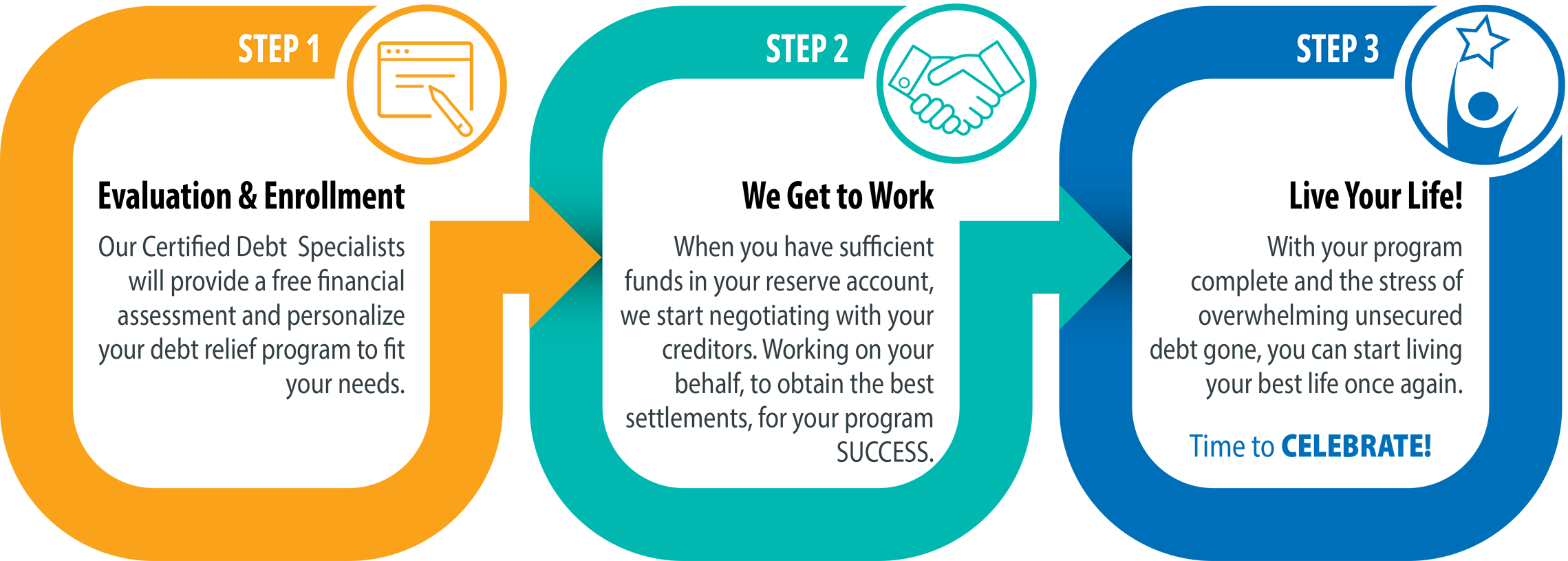
With debt settlement, you can pay off your sizable balance in less time than if you try to handle payments yourself. Additionally, we’ll address your total debt with your creditors and work with them to agree to a lower amount to clear your balance. Debt relief may be the best option for you to regain your financial freedom and prevent legal consequences from unpaid credit card bills. Below, we’ve explained the simple steps to our debt settlement process:
You’ll start by undergoing a free financial assessment with our Certified Debt Specialists, who will create a tailored debt relief program that fits your financial situation and needs.
After saving a sufficient amount of money in a reserve account to pay a lump sum, our team negotiates with your creditors to reach an agreement that equals a lower total cost to you. We work hard to get you the best possible settlement, ensuring your personalized program is a complete success.
You get to return to your life without the burden of overwhelming debt after you complete your debt relief program. After your unsecured debt is eliminated, you enjoy financial control again and a chance to build a better future.
Deciding how to handle overwhelming debt is a major life decision. When comparing Century Support Services' debt relief vs. bankruptcy options, it's crucial to understand how they differ and the long-term implications bankruptcy can have. Knowing the difference can help you choose the right path for your financial health without limiting future opportunities.
Part of Century Support Services, LLC’s debt-free roadmap is bringing essential factors to light that your debt relief program will involve. We gladly handle negotiations with your creditors and ensure you get the best possible agreed-upon debt amount to repay. This process can impact your credit score and taxes, so we want you to be aware of what you can expect while carrying out the steps. Some vital components of a debt settlement plan include the following:
When you hire us, our specialists carefully approach negotiations with your creditors to discuss your financial obligations and convince them to agree on a lower debt amount. This part of the process can save you a significant amount of money while clearing your debts in full.
You should always document any agreement in writing when you reach its conclusion. These documents must include your settlement’s term details and the amount you must pay.
Forgiven debt is an excellent way to eliminate part or all of your debt. However, the government may consider your forgiven debt to be taxable income, so you may end up paying a sum of money as part of your tax season activities. We recommend seeking clarity on your specific situation with a tax professional.
Once all parties agree upon a settlement, adhering to all payment terms is paramount. Failing to comply with these terms can cancel out the agreement, leaving you with your original debt amount and the same overwhelming position with your creditors as before you started the debt settlement process.
As seasoned debt relief professionals, the specialists at Century Support Services, LLC has ample training and experience handling a broad range of financial burdens and debt amounts. Your unsecured debt can hang around your neck and worsen your financial situation for years to come. With our support and expertise, we can help you pay off your debt for less, avoid bankruptcy, and prevent legal action from your creditors. Our company has spent over 20 years serving the debt relief needs of people across the country. While debt settlement might cause a dip in your credit score in the short term, the freedom of being debt-free and opportunity to build better financial health can make these programs well worth the effort.
Century Support Services, LLC’s personalized debt relief programs may be the best solution to your staggering credit card balances and other forms of unsecured debt. Our team will gladly discuss your specific financial situation to determine if you qualify for debt settlement and then get to work helping regain control over your finances.
If you’re ready to tackle your overwhelming debt with help from a seasoned debt relief professional, Century Support Services, LLC is ready to help with nationwide reach. Reach out to us today to start the process with an assessment and let us save you time and money while resolving your balances.
If an enrolled account settles in Century’s SmartTrack™ program and the forgiven amount is $600 or more, a Form 1099-C will arrive in your...

Before your first enrolled account settles in Century’s SmartTrack™ program, there is one topic worth understanding that has nothing to do...
Joint debt, accounts where two people are both named account holders, creates a specific set of questions when one or both of those people are in...